Low
Home energy in Kentucky: prices, who sells you power and what is open
Your utility sells you electricity, solar export credits are set utility by utility, and the state's home energy rebates were not yet available on the state's pages. Here is how each part works.
By VoltHearth Editorial Team Updated 6 min read
- Electricity price
- 13.13¢ per kWh
- Natural gas price
- $14.23 per Mcf
- Pick your supplier
- No energy-only suppliers
- Net metering
- Utility-set credit rates
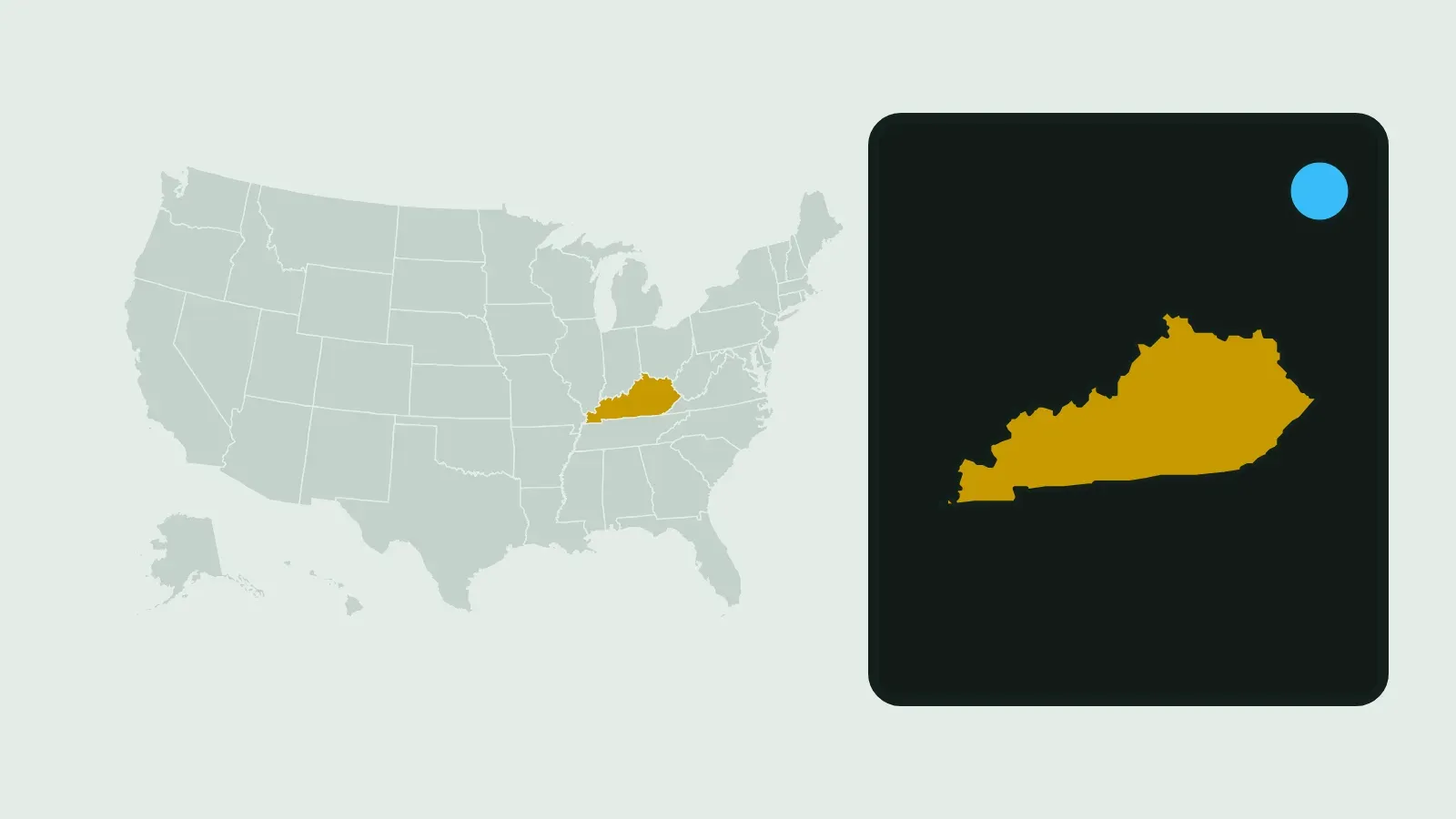
At a glance
Kentucky households paid an average of 13.13¢ per kWh for electricity in 2025, below the national average, and $14.23 per thousand cubic feet for natural gas, also below it. EIA reports no energy-only electricity sales in Kentucky, so the utility serving your address sells you the power. Solar export credits are set in each utility's tariff: a March 2026 Public Service Commission order lists NMS-2 credits of about 7.5¢ per kWh at KU and 7.1¢ at LG&E. The state's home energy rebates were marked not yet available.
Kentucky at a glance
What Kentuckians pay for electricity and gas
The U.S. Energy Information Administration (EIA) reports statewide averages: total residential revenue divided by kilowatt-hours sold, so delivery charges and fees are inside the figure. Your own rate depends on your utility, rate class and season, so treat these as a yardstick, not a quote.
| Energy | Kentucky 2025 | Kentucky 2024 | U.S. 2025 |
|---|---|---|---|
| Electricity (¢ per kWh) | 13.13 | 12.79 | 17.23 |
| Natural gas (dollars per Mcf) | 14.23 | 13.61 | 15.34 |
At 13.13¢, a month with 1,000 kWh of use comes to about $131. Kentucky electricity rose about 3% between 2024 and 2025 (12.79¢ to 13.13¢) and sat about 24% below the U.S. average. Gas was about 7% below the U.S. average per Mcf. One Mcf holds roughly 10.37 therms, so $14.23 per Mcf is about $1.37 per therm; the kWh, therm and ccf guide explains the units on your bill.
Who sells you electricity
EIA's 2024 state profile shows all Kentucky retail electricity sales as full-service sales and none as energy-only sales, the category that marks retail choice. In practice the utility serving your address is the seller. The Public Service Commission's (PSC) home page shows rate cases for utilities such as Kentucky Power, East Kentucky Power Cooperative, Big Rivers Electric, Duke Energy Kentucky, and LG&E and KU.
Natural gas is different in one place. The PSC runs a page on the Columbia Gas Customer Choice Program, a gas program, not an electricity one. If Columbia Gas of Kentucky serves you, read that page before you compare gas suppliers. The retail choice guide explains how to compare plans on the total bill.
Solar panels and what the grid pays you
Solar customers are credited under their utility's net metering tariff. The only Kentucky utilities whose credit rates this page confirms are LG&E and KU. In its March 27, 2026 order in cases 2025-00113 (KU) and 2025-00114 (LG&E), the PSC denied a request to revise the NMS-2 credit rates to match updated qualifying-facility rates and kept the credits at their approved levels. It told LG&E and KU to update the avoided-cost components of NMS-2 with their next qualifying-facility filing.
| Utility | Credit per kWh |
|---|---|
| Kentucky Utilities (KU) | $0.07534 |
| Louisville Gas and Electric (LG&E) | $0.07089 |
That is about 7.5¢ and 7.1¢, well below the 13.13¢ statewide average retail price, so an exported kilowatt-hour is credited for less than a kilowatt-hour you buy. The same order granted LG&E and KU's request for reconsideration only to gather more information, reopened the case and set a schedule, so these figures can change. For another utility, ask for its net metering tariff in writing and run the credit through the solar payback calculator. The federal solar credit ended for systems finished after December 31, 2025; see what happened to 25C and 25D.
Home energy rebates
The Kentucky Energy and Environment Cabinet's Office of Energy Policy runs the state's federal home energy rebates. Its tracker site says the rebates "are not yet available." It puts the state at step 2 of 5, application and plan submission, with the plan going to the U.S. Department of Energy for review and approval, then DOE funds, then the application portal. The pages give no dates or dollar amounts and no "last updated" date.
The cabinet's own rebate page says the program is not yet accepting applications and suggests residents consider waiting before non-essential or non-emergency home improvements, because DOE must approve the state's plan before requests open. The tracker names the "Home Energy Rebates Program," not HOMES or HEAR individually, so which pieces Kentucky will run is not stated there. How the programs work in general is in the HOMES and HEAR guide.
Who to call
- Electricity and gas: the Kentucky Public Service Commission. Its consumer line is 1-800-772-4636, and its Master Utility Search identifies the utility that serves your address.
- Rebates: the Office of Energy Policy at the Kentucky Energy and Environment Cabinet.
- Solar interconnection: your utility first. The PSC's older net metering guideline document is dated 2009 and may be out of date.
What is distinctive about energy in Kentucky
EIA lists coal as Kentucky's primary source of electricity generation. In 2024 net generation was about 67.0 million megawatt-hours and retail sales about 74.4 million, and EIA ranks the state second in carbon dioxide emitted per megawatt-hour of generation. Generation inside the state is not the same as what reaches your meter, which depends on your utility. To see how a bill is built, read the electric bill guide.
Quick answers
Can I choose my electricity provider in Kentucky?
EIA's 2024 profile shows no energy-only retail electricity sales in Kentucky, so the utility serving your address sells you the power. The PSC does run a customer choice program for Columbia Gas natural gas customers.
Does Kentucky have net metering?
Utilities offer net metering under their own tariffs. At LG&E and KU the NMS-2 credit for excess generation was $0.07089 and $0.07534 per kWh in the PSC's March 27, 2026 order, and that case was reopened for more information. Ask your utility for its current tariff.
Are Kentucky home energy rebates available now?
Not according to the state's pages, which say the rebates are not yet available and show the state at step 2 of 5. The pages carry no date, so check the energyrebates.ky.gov tracker before you start work you hope a rebate will cover.
Is Kentucky electricity cheaper than the U.S. average?
By EIA's 2025 residential average, yes: 13.13¢ per kWh against 17.23¢ nationally. Your own rate depends on the utility serving you.
Sources
- EIA — Electric Power Annual, Table 2.10, average price by state
- EIA — Average residential natural gas price by state
- EIA — Kentucky electricity profile
- Kentucky PSC — Order of March 27, 2026, Cases 2025-00113 and 2025-00114
- Kentucky PSC — Consumer information
- Kentucky Energy and Environment Cabinet — Home energy rebates tracker
- Kentucky Energy and Environment Cabinet — Kentucky Home Energy Rebates
Prices are EIA statewide averages. Facts on this page were checked against these sources on November 19, 2026. Rebate programs and utility tariffs change; confirm with your utility and the Office of Energy Policy before you act.
Read next
-

Bill guide
Net metering
How exported solar power is credited on a bill, how net billing differs, and where to find your rule.
-

Credits and rebates
HOMES and HEAR rebates
State-run DOE rebates and the May 2026 rule changes. Status differs by state.
-
State reading
Louisiana
12.52¢ per kWh; your utility sells the power; solar exports at avoided cost; rebates in progress.