High
Home energy in Maryland: prices, who sells you power and what is open
Many Marylanders buy power from a competitive supplier, net metering has a statewide cap and a successor under discussion, and the state's home energy rebates are waiting on federal approval. Here is how each part works.
By VoltHearth Editorial Team Updated 7 min read
- Electricity price
- 19.53¢ per kWh
- Natural gas price
- $16.14 per Mcf (2024)
- Pick your supplier
- Yes (46% of sales)
- Net metering
- Yes; 3,000 MW cap
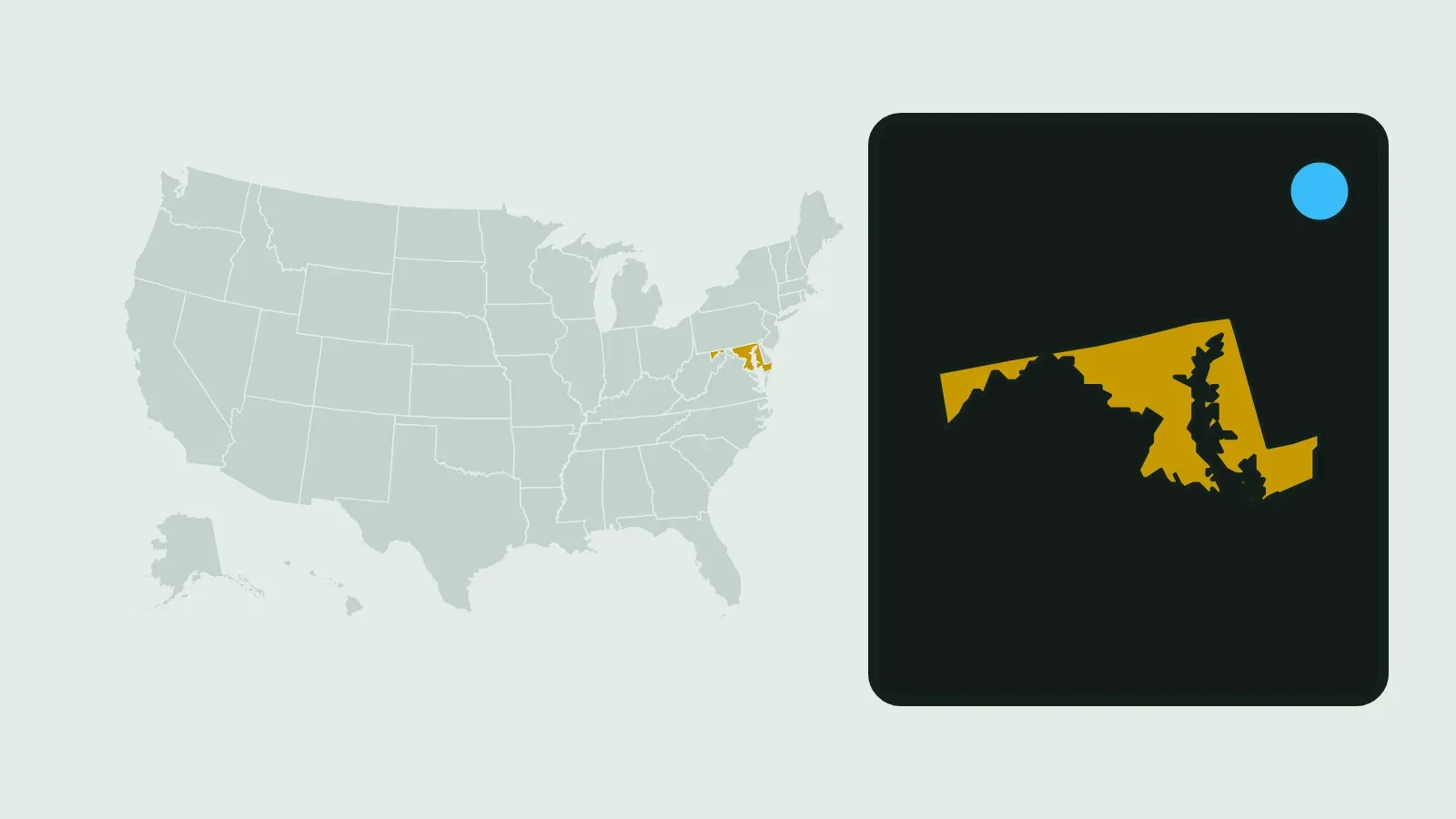
At a glance
Maryland households paid an average of 19.53¢ per kWh for electricity in 2025, about 13% above the national average and up about 9% from 2024. EIA did not report a 2025 natural gas price for Maryland; the 2024 figure was $16.14 per thousand cubic feet. EIA's 2024 profile shows about 46% of retail sales as energy-only sales, the mark of retail choice. Net metering runs under a 3,000 MW statewide cap, about 51% used in mid-2025. The state's HOMES and HEEHR rebates had not launched; the state resubmitted its applications to DOE on September 30, 2026.
Maryland at a glance
What Marylanders pay for electricity and gas
The U.S. Energy Information Administration (EIA) reports statewide averages: total residential revenue divided by kilowatt-hours sold, so delivery charges and fees are inside the figure. Your own rate depends on your utility, supplier, plan and season, so treat these as a yardstick, not a quote.
| Energy | Maryland 2025 | Maryland 2024 | U.S. 2025 |
|---|---|---|---|
| Electricity (¢ per kWh) | 19.53 | 17.86 | 17.23 |
| Natural gas (dollars per Mcf) | Not reported | 16.14 | 15.34 |
At 19.53¢, a month with 1,000 kWh of use comes to about $195. Maryland electricity rose about 9% between 2024 and 2025 (17.86¢ to 19.53¢). EIA did not report a 2025 gas price for Maryland. The 2024 figure of $16.14 per Mcf was about 11% above the 2024 U.S. average of $14.50, and works out to about $1.56 per therm at 10.37 therms per Mcf. The kWh, therm and ccf guide explains the units on your bill.
Who sells you electricity
EIA's 2024 state profile splits Maryland retail electricity sales into full-service sales, about 54%, and energy-only sales, about 46%. Energy-only sales are the category that marks retail choice: a supplier sells the power while your utility keeps delivering it. Your bill names both your utility and, if you have one, your supplier.
Plans differ on fixed or variable price, contract length and cancellation terms. The retail choice guide shows how to compare them on the total bill at your own usage instead of the headline rate.
Solar panels and what the grid pays you
Net energy metering in Maryland is set by Public Utilities Article section 7-306 and the Public Service Commission's regulation COMAR 20.50.10. The Commission's page lists a statewide cap of 3,000 MW, and its 2025 report says the aggregate limit was 3,000 MW as of October 1, 2021.
- Usage of the cap: about 1,537 MW was installed as of June 30, 2025, roughly 51% of the cap, made up of about 1,321 MW of net metering and about 216 MW of community solar. The report adds that this figure no longer represents the full potential, because pending community solar projects total about 2,911 MW.
- How credits work: a single meter nets your use against your generation each billing period. The report says excess generation is valued at the generation or commodity rate, averaged over 12 months.
- Excess generation: you can carry it forward indefinitely under a 2023 law (SB 143) or take an annual payout at the end of April.
- Potomac Edison: the report says the utility switches to dollar credits on January 1, 2026.
The federal tax credit for rooftop solar ended for systems finished after December 31, 2025. What happened to 25C and 25D explains what is left.
Home energy rebates
The Maryland Energy Administration (MEA) runs two federally funded programs under the Inflation Reduction Act: the Homeowners Managing Energy Savings Rebate Program (HOMES), for whole-home efficiency projects that meet a minimum savings threshold, and the High-Efficiency Electric Home Rebate Program (HEEHR, the program this site calls HEAR), for electric appliances.
MEA's page is marked not yet launched. Its program status update dated September 30, 2026 says MEA resubmitted updated applications for both programs to DOE after DOE issued revised guidance. The page says the launch timeline "remains dependent on when DOE reviews and approves these applications." It does not state dollar totals or per-household maximums and points to the MyMEA Portal for updated rebate numbers. A site migration notice says most MEA pages stay static as of November 13, 2026, so check the portal. Until MEA says applications are open, do not count on a rebate. How the programs work is in the HOMES and HEAR guide.
Who to call
- Electricity and net metering: the Maryland Public Service Commission, which publishes an annual net metering report.
- Rebates: the Maryland Energy Administration, at [email protected] or through the MyMEA Portal.
What is distinctive about energy in Maryland
EIA lists nuclear as Maryland's primary source of electricity generation. In 2024 retail sales were about 59.0 million megawatt-hours against in-state net generation of about 35.4 million. Maryland also has a Community Solar program for people who cannot put panels on their own roof. The Commission's 2025 report says the pilot became permanent after March 2025 rule changes, with tariff revisions effective July 1, 2025. Ask a program operator how bill credits are valued before you subscribe. The net metering guide explains how credits work in general.
Quick answers
Can I choose my electricity provider in Maryland?
Yes, for many customers. EIA's 2024 profile shows about 46% of retail electricity sales were energy-only sales, the category that marks retail choice. Your bill shows your utility and any supplier you already have.
Does Maryland have net metering?
Yes, under a statewide cap of 3,000 MW that was about 51% installed on June 30, 2025. Excess generation is valued at the generation or commodity rate averaged over 12 months. A successor framework was recommended for 2026, so check the Commission for current rules.
Are Maryland home energy rebates available now?
Not as of MEA's September 30, 2026 update, which says the state resubmitted its HOMES and HEEHR applications to DOE and that launch depends on DOE's review. Check MEA before you start work you hope a rebate will cover.
Why did Maryland's electricity price rise in 2025?
EIA's residential average rose from 17.86¢ to 19.53¢ per kWh, about 9%. EIA's averages do not break down the reasons. Your bill's supply and delivery lines show which part changed for you.
Sources
- EIA — Electric Power Annual, Table 2.10, average price by state
- EIA — Average residential natural gas price by state
- EIA — Maryland electricity profile
- Maryland PSC — Solar in Maryland
- Maryland PSC — Net Energy Metering in the State of Maryland (2025 report)
- Maryland Energy Administration — Inflation Reduction Act Home Energy Rebate Programs
Prices are EIA statewide averages; EIA did not report a 2025 gas price for Maryland. Facts on this page were checked against these sources on November 19, 2026. Rebate programs and utility policies change; confirm with your utility and the Maryland Energy Administration before you act.
Read next
-
Bill guide
Retail choice plans
What you can switch when you pick an electricity supplier, plan types, and how to compare offers.
-
Bill guide
Net metering
How exported solar power is credited on a bill, how net billing differs, and where to find your rule.
-
State reading
Massachusetts
30.41¢ per kWh; supplier choice; net metering with caps; HER and HEAR not confirmed open.