Low
Home energy in Missouri: prices, net metering and rebate timing
Missouri electricity is well below the U.S. average. Net metering pays for exports at avoided fuel cost, and the state says its home energy rebates may not arrive before 2027.
By VoltHearth Editorial Team Updated 6 min read
- Electricity price
- 13.30¢ per kWh
- Natural gas price
- $14.94 per Mcf
- Pick your supplier
- Not confirmed
- Net metering
- Yes, up to 100 kW
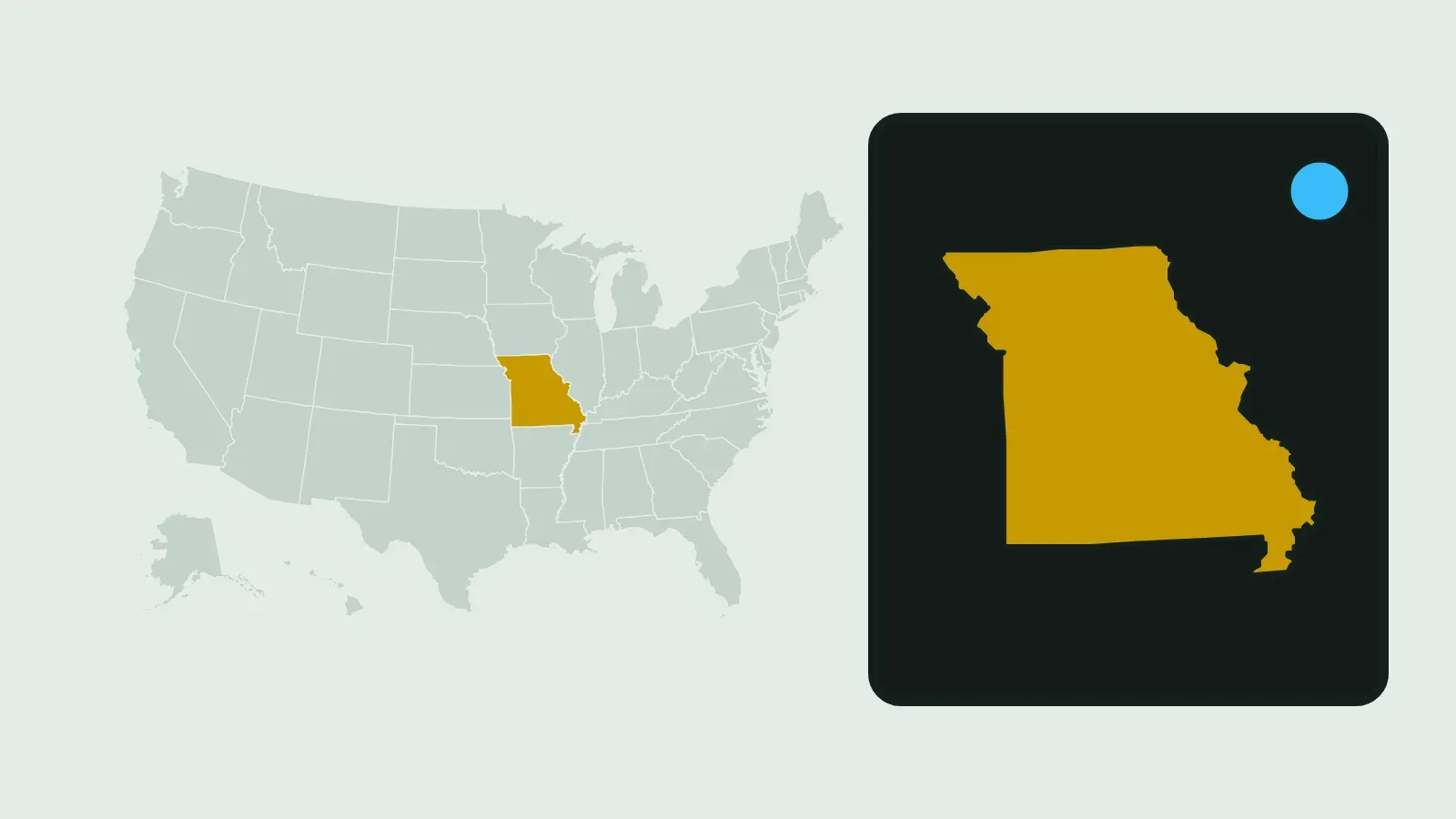
At a glance
Missouri households paid an average of 13.30¢ per kWh for electricity in 2025, well below the national average, and $14.94 per thousand cubic feet for natural gas, slightly below it. State law requires net metering for solar systems up to 100 kW, with exports credited at no less than the utility's avoided fuel cost. The Department of Natural Resources says its HOMES and HEAR rebates may not be available until 2027 at the earliest, and possibly 2028.
Missouri at a glance
What Missourians pay for electricity and gas
The U.S. Energy Information Administration (EIA) reports statewide averages: total residential revenue divided by kilowatt-hours sold, so delivery charges and fees are inside the figure. Your own rate depends on your utility and rate class, so treat these as a yardstick, not a quote.
| Energy | Missouri 2025 | Missouri 2024 | U.S. 2025 |
|---|---|---|---|
| Electricity (¢ per kWh) | 13.30 | 12.91 | 17.23 |
| Natural gas (dollars per Mcf) | 14.94 | 16.86 | 15.34 |
At 13.30¢, a month with 1,000 kWh of use comes to about $133. Missouri electricity rose about 3% between 2024 and 2025 (12.91¢ to 13.30¢) and sits about 23% below the U.S. average. Gas moved the other way: the average fell about 11% in a year, from $16.86 to $14.94 per Mcf. One Mcf holds roughly 10.37 therms, so $14.94 per Mcf is about $1.44 per therm; the kWh, therm and ccf guide explains the units on your bill.
Who sells you electricity
The Missouri Department of Natural Resources lists three kinds of electric supplier in its net metering guide: regulated electric utilities (Ameren Missouri, Evergy Missouri Metro, Evergy Missouri West and Liberty), municipal electric utilities and rural electric cooperatives. The Public Service Commission (PSC) regulates the first group; city and co-op customers deal with their own utility.
The sources reviewed do not describe a program that lets homes pick a different electricity supplier, and VoltHearth could not confirm one from a state source. Your bill names your utility; the rate structures guide explains how its charges are built.
Solar panels and what the grid pays you
Missouri's net metering law, section 386.890 of the state statutes, applies to electrical corporations, municipal utilities and rural co-ops. The version reviewed is the one effective August 28, 2022; VoltHearth could not confirm whether later amendments exist.
- Size: the customer's system may be no more than 100 kilowatts and must run on a renewable resource.
- Credit for exports: excess kilowatt-hours are credited at no less than the utility's avoided fuel cost and applied to the next billing period. That is a wholesale-type rate, not the retail rate.
- Expiry: unused credits expire without payment at the earlier of 12 months after issue or the end of the net metering arrangement.
- Program cap: net metering capacity is capped at 5% of a utility's prior-year peak load, and a utility need not approve new interconnections in a year once approved capacity reaches 1% of that peak.
Because exports earn less than the retail rate, the payback comes mostly from the power you use yourself. Run your own numbers in the solar payback calculator and read the net metering guide. The federal tax credit ended for systems finished after December 31, 2025; see what happened to 25C and 25D.
Home energy rebates
The Department of Natural Resources (DNR) Division of Energy will run the two federally funded programs. Missouri submitted its application to the U.S. Department of Energy on November 22, 2024, and expects $76 million for HOMES and $75 million for HEEHR (the statute's name for HEAR), subject to federal actions. Up to 20% of each can go to administration.
The DNR program page (undated) says eligibility and application details are not finalized, that rebates may not be available until 2027 at the earliest and possibly 2028, and that it cannot estimate a launch date. It also says federal funding is limited and will reach a limited set of households. Rebates can be combined with some other funding, such as utility rebates. How the programs work elsewhere is in the HOMES and HEAR guide.
Who to call
- Electricity and gas: the Missouri Public Service Commission, which covers electric, natural gas and water utilities.
- Rebates and net metering guidance: the Division of Energy at the Missouri Department of Natural Resources.
Quick answers
Can I choose my electricity provider in Missouri?
VoltHearth could not confirm a retail choice program for homes from a state source. Your bill names your utility, which may be an investor-owned company, a city utility or a co-op.
Does Missouri have net metering?
Yes. State law covers systems up to 100 kW, and exports are credited at no less than the utility's avoided fuel cost. Credits expire after 12 months, so size the system to your own use.
Are Missouri home energy rebates available now?
No. The Department of Natural Resources says they may not be available until 2027 at the earliest and possibly 2028, with no launch date it can estimate.
Why did Missouri gas fall in 2025?
EIA's average for Missouri households went from $16.86 per Mcf in 2024 to $14.94 in 2025. The figure blends supply, delivery and fixed charges, and EIA does not break out the reasons.
Sources
- EIA — Electric Power Annual, Table 2.10, average price by state
- EIA — Average residential natural gas price by state
- Missouri Revisor of Statutes — Section 386.890, net metering
- Missouri DNR Division of Energy — Net metering guide (PUB2238)
- Missouri DNR — Home energy rebates programs
- Missouri Public Service Commission
Prices are EIA statewide averages. Facts on this page were checked against these sources on November 19, 2026. The net metering text reviewed is the version effective August 28, 2022. Rebate programs and utility policies change; confirm with your utility and the Department of Natural Resources before you act.
Read next
-
Bill guide
Net metering
How exported solar power is credited on a bill, how net billing differs, and where to find your rule.
-
Credits and rebates
HOMES and HEAR rebates
State-run DOE rebates and the May 2026 rule changes. Status differs by state.
-
State reading
Kansas
14.44¢ per kWh; your utility sells the power; net metering at Evergy and Liberty; rebates not open yet.