High
Home energy in Ohio: prices, supplier choice and solar credits
Ohio electricity sits just under the U.S. average and gas is below it. You can shop for supply, solar exports earn a monthly credit, and the status of home rebates could not be confirmed.
By VoltHearth Editorial Team Updated 5 min read
- Electricity price
- 16.90¢ per kWh
- Natural gas price
- $13.85 per Mcf
- Pick your supplier
- Yes, where offered
- Net metering
- Yes, monthly credit
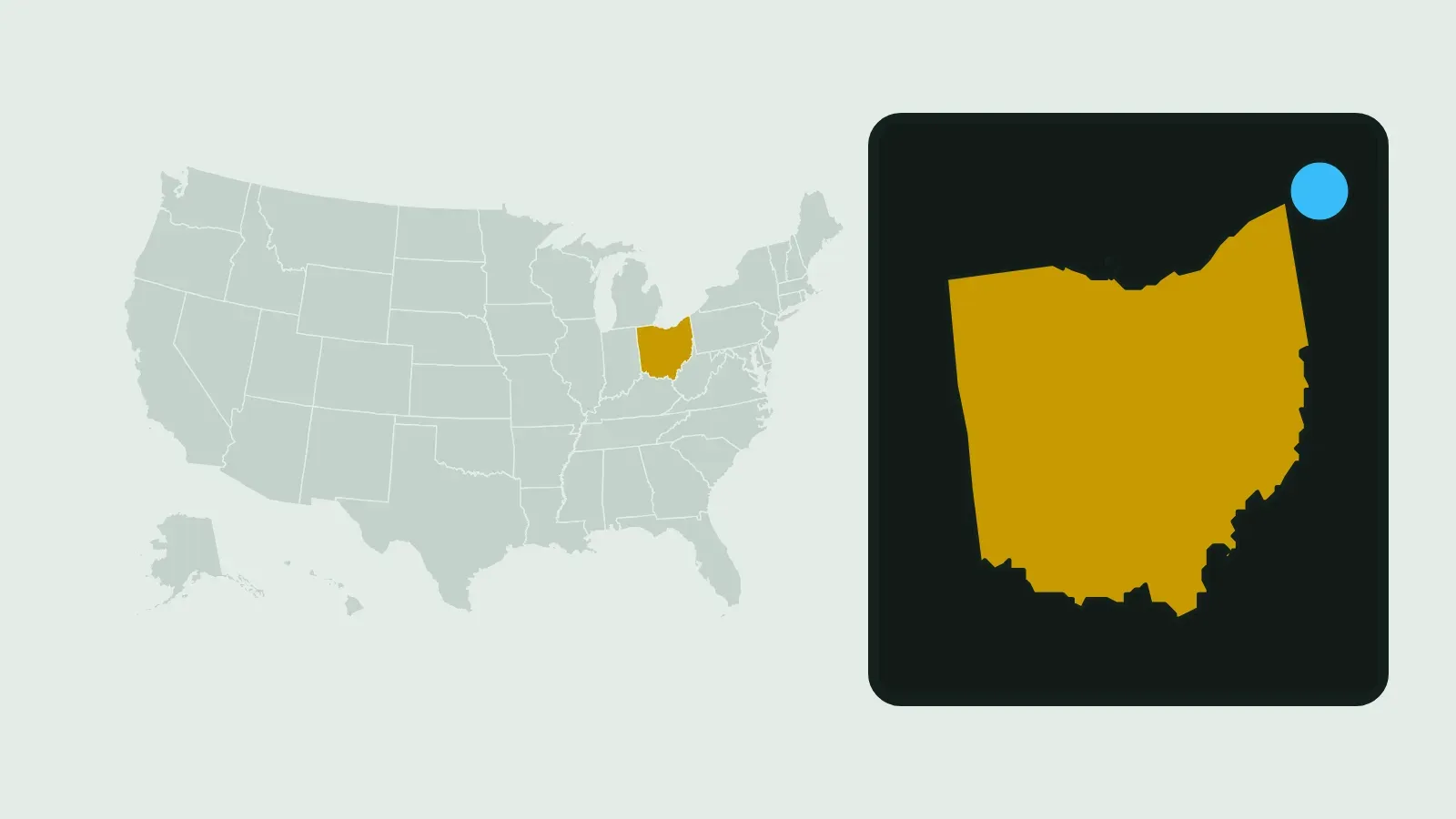
At a glance
Ohio households paid an average of 16.90¢ per kWh for electricity in 2025, about 2% below the national average, and $13.85 per thousand cubic feet for natural gas, about 10% below it. The Public Utilities Commission of Ohio (PUCO) certifies competitive suppliers, so you can shop for electricity and gas. Under PUCO's net metering rule, excess solar power becomes a bill credit that carries forward but is not paid out in cash. Current rebate status could not be confirmed from a state page.
Ohio at a glance
What Ohioans pay for electricity and gas
The U.S. Energy Information Administration (EIA) publishes a statewide average for each fuel: what utilities and suppliers billed households, divided by what they used. Delivery charges and fees are inside the number. Your own rate depends on your utility, your supplier and the season, so read these as a yardstick, not a quote.
| Average price | 2024 | 2025 |
|---|---|---|
| Electricity, Ohio (¢ per kWh) | 15.99 | 16.90 |
| Electricity, U.S. (¢ per kWh) | 16.48 | 17.23 |
| Natural gas, Ohio (dollars per Mcf) | 13.77 | 13.85 |
| Natural gas, U.S. (dollars per Mcf) | 14.50 | 15.34 |
At 16.90¢, a month with 1,000 kWh of use comes to about $169. The Ohio average rose about 6% between 2024 and 2025 (15.99¢ to 16.90¢) and stayed a little below the U.S. figure. Gas was nearly flat, from $13.77 to $13.85 per Mcf. One Mcf holds roughly 10.37 therms, so $13.85 is about $1.34 per therm. The kWh, therm and ccf guide explains the units on your bill.
Who sells you electricity
PUCO's energy choice site says residential customers can shop for an electricity generation supplier and for a natural gas supplier. Suppliers must be certified by PUCO, and the more suppliers serve an area, the more you can compare. PUCO runs a comparison tool called Apples to Apples that lists prices, contract terms and other plan differences side by side for electricity and gas. Your local utility still delivers the energy.
- What you compare: the price per kWh or per Mcf, contract length, fees, and whether the rate is fixed or variable. The retail choice guide shows how to compare plans on your total bill.
- Where it applies: the PUCO page does not describe eligibility rules, so check the Apples to Apples chart for your address before you count on offers.
- If you have solar: a supplier can offer different export terms by contract, so ask before you switch.
Solar panels and net metering
PUCO's net metering rule, Ohio Administrative Code 4901:1-10-28, took effect April 8, 2024. Two points matter to a homeowner. A system must be sized so it does not exceed 120% of your electricity requirements at the time of interconnection, which is generally based on your average annual use over the previous three years. The rule sets no separate kilowatt cap for homes.
When you send more power to the grid than you use in a billing cycle, the excess becomes a monetary credit valued at the energy component of the utility's standard service offer. That credit carries forward on your future bills. The utility is not required to pay it out, and the credit can be lost if you stop taking service from the utility. A supplier may offer different terms by contract.
The federal tax credit for rooftop solar ended for systems finished after December 31, 2025. What happened to 25C and 25D explains what is left.
Home energy rebates
The U.S. Department of Energy funds two programs run by state energy offices: HOMES for whole-home efficiency work and HEAR for electric appliances. The Ohio source VoltHearth could open is an undated slide deck from the state's Office of Energy and Environment, apparently prepared in 2024. It describes a Home Energy Savings Program with a HOMES component open to all Ohioans and an appliance component for households below 150% of area median income. It cites an allocation of nearly $250 million and a launch planned to begin in the fourth quarter of 2024.
VoltHearth could not find a current Ohio page that says whether the programs have opened, what the rebate amounts are or how to apply. DOE's own program page, last updated July 8, 2026, lists no states and sends readers to their state energy office. Treat any rebate offer as unconfirmed until a state page says otherwise. The programs are explained in the HOMES and HEAR guide.
Who to call
- Electricity and gas utilities, supplier certification and the Apples to Apples chart: the Public Utilities Commission of Ohio, which also runs a consumer complaint process.
- Rebates: the Ohio Department of Development, Office of Energy and Environment, which authored the program deck.
- Solar billing questions: your utility, which applies the net metering rule to your account.
Quick answers
Can I choose my electricity supplier in Ohio?
Yes. PUCO says residential customers can shop for electricity and natural gas suppliers that it has certified. Your utility keeps delivering the energy. Use the Apples to Apples chart to compare plans for your address.
How does net metering work in Ohio?
Excess solar power becomes a monthly credit at the energy component of the utility's standard service offer. The credit carries forward, is not paid in cash and can be lost if you leave the utility. Systems are sized to no more than 120% of your requirements.
Are Ohio home energy rebates available now?
VoltHearth could not confirm it. The state deck it found is undated and describes a launch planned for late 2024. Contact the Ohio Department of Development before you start work you hope a rebate will cover.
Why is Ohio's electricity price near the U.S. average?
EIA's 2025 average for Ohio households was 16.90¢ per kWh against 17.23¢ nationally. The figure includes delivery charges and fees. Your bill shows how your own rate is built; the electric bill guide walks through the lines.
Sources
- EIA — Electric Power Annual, Table 2.10, average price by state
- EIA — Average residential natural gas price by state
- PUCO — Energy choice Ohio
- Ohio Administrative Code — Rule 4901:1-10-28, net metering
- Ohio Department of Development — Home Energy Savings feedback session slides (undated)
- U.S. Department of Energy — Home energy rebates programs
Prices are EIA statewide averages. Facts on this page were checked against these sources on November 19, 2026. The Ohio rebate source is undated and current rebate status could not be confirmed; confirm with your utility, PUCO and the Ohio Department of Development before you act.
Read next
-
Bill guide
Retail choice plans
What you can switch when you pick an electricity supplier, plan types, and how to compare offers.
-
Bill guide
Net metering
How exported solar power is credited on a bill, how net billing differs, and where to find your rule.
-
State reading
New York
26.39¢ per kWh; supplier choice is optional; net metering by default; EmPower+ rebates, dates unconfirmed.