Highest
Home energy in Rhode Island: prices, supply choice and rebates
Rhode Island electricity is among the highest in the country. Supplier choice exists, net metering rules are under review, and an income-eligible electrification rebate has been open since 2024.
By VoltHearth Editorial Team Updated 6 min read
- Electricity price
- 29.48¢ per kWh
- Natural gas price
- Not reported for 2025
- Pick your supplier
- Yes, any customer
- Net metering
- Yes; rules under review
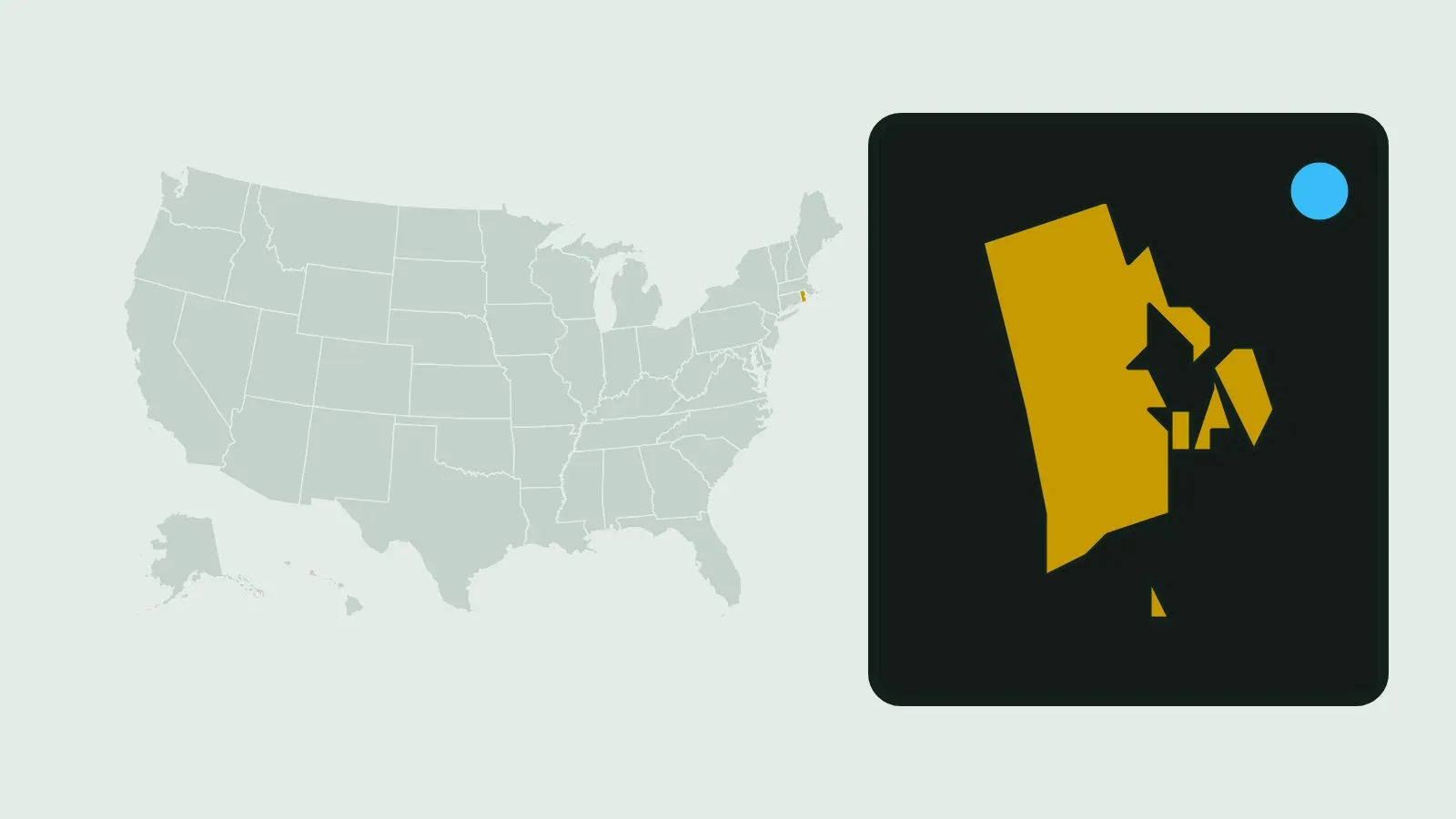
At a glance
Rhode Island households paid an average of 29.48¢ per kWh for electricity in 2025, about 71% above the national average. EIA did not report a 2025 gas average; the 2024 figure was $21.66 per thousand cubic feet. Any customer can buy from a competitive supplier, though most households stay on the utility's standard offer. Net metering is under review at the Public Utilities Commission, and the income-eligible HEAR pathway has been open since September 17, 2024.
Rhode Island at a glance
What Rhode Islanders pay for electricity and gas
The U.S. Energy Information Administration (EIA) publishes a statewide average for each fuel: what utilities and suppliers billed households, divided by what they used. Delivery charges and fees are inside the number. Your own rate depends on your supplier or standard offer, and the season, so read these as a yardstick, not a quote.
| Average price | 2024 | 2025 |
|---|---|---|
| Electricity, Rhode Island (¢ per kWh) | 28.65 | 29.48 |
| Electricity, U.S. (¢ per kWh) | 16.48 | 17.23 |
| Natural gas, Rhode Island (dollars per Mcf) | 21.66 | Not reported |
| Natural gas, U.S. (dollars per Mcf) | 14.50 | 15.34 |
At 29.48¢, a month with 1,000 kWh of use comes to about $294.80. The Rhode Island average rose about 3% between 2024 and 2025. For gas, the 2024 average of $21.66 per Mcf ran about 49% above the 2024 U.S. figure. One Mcf holds roughly 10.37 therms, so $21.66 is about $2.09 per therm. The kWh, therm and ccf guide explains the units on your bill.
Who sells you electricity
The Public Utilities Commission (PUC) says any customer in Rhode Island can buy electricity from a competitive supplier. Rhode Island Energy, formerly National Grid, still delivers the power, handles service calls and manages storm restoration. The supplier provides only the energy-cost portion of the bill. Suppliers must be registered with the Division of Public Utilities and Carriers, and some listed suppliers may not be enrolling new customers.
- Standard offer service: the PUC calls this last resort service. Residential rates reset every six months, effective April 1 and October 1, based on market conditions.
- Residential contracts: a 2019 law ended automatic renewals for residential contracts and requires a new contract when the rate type changes.
- Blocking a switch: you can ask Rhode Island Energy to place a block on your account.
The PUC page notes that competitive supply is most common among larger commercial and industrial accounts. The retail choice guide shows how to compare an offer against the standard offer on your total bill. Call the Division's Consumer Section at (401) 780-9700 with questions.
Solar panels and net metering
Rhode Island Energy filed a tariff change at the PUC (docket 25-50-EL) to incorporate 2025 legislative changes to net metering. In a memo dated June 22, 2026, the Division of Public Utilities and Carriers said the filing makes three substantive changes: it defines "under construction" for the 275 MW ground-mounted cap, it values excess renewable net metering credits at the wholesale power rate instead of the Last Resort Service rate, and it removes the sizing limit on systems of 25 kW and below. The Division said it supports the changes.
VoltHearth could not confirm from the PUC's docket page whether the Commission has ruled, so the final tariff may differ from the filing. A lower wholesale credit rate for excess power would reduce what exports are worth, so ask the installer which tariff version will apply to your system.
The federal tax credit for rooftop solar ended for systems finished after December 31, 2025. What happened to 25C and 25D explains what is left.
Home energy rebates
The state energy office says Rhode Island has about $31 million for HEAR, rebates for home electrification upgrades, and about $32 million for the Home Efficiency Rebates (HER, called HOMES elsewhere). HEAR is income-restricted. The page says the Department of Energy approved the application and the Office of Energy Resources launched the income-eligible pathway on September 17, 2024. It says a retail pathway will launch in 2026 to make rebates available to low- and moderate-income residents, without naming a month. The page is undated.
For HER, the state says its application was accepted and is pending Department of Energy approval to launch. Residents must apply and be pre-approved before using a coupon on an eligible product. VoltHearth did not find dollar limits on the page. The programs are explained in the HOMES and HEAR guide.
Who to call
- Electricity rates and tariffs: the Rhode Island Public Utilities Commission, and the Division of Public Utilities and Carriers, which registers suppliers and takes consumer calls.
- Rebates: the Rhode Island Office of Energy Resources, listed on the state's rebate page.
- Billing and interconnection questions: Rhode Island Energy, which applies the net metering tariff to your account.
Quick answers
Can I choose my electricity supplier in Rhode Island?
Yes. The PUC says any customer can buy from a competitive supplier registered with the Division. Rhode Island Energy still delivers the power. Compare the total bill against the standard offer.
Is net metering changing in Rhode Island?
A tariff filing at the PUC would value excess credits at the wholesale rate and remove the sizing limit for systems of 25 kW and below. The Division supports it, but VoltHearth could not confirm a final Commission decision.
Are Rhode Island home energy rebates available now?
The state says its income-eligible HEAR pathway launched on September 17, 2024, and a retail pathway is planned for 2026. HER was pending federal approval. The page is undated, so check the state energy office before you start work.
Why are Rhode Island electricity prices above the U.S. average?
EIA's 2025 average for Rhode Island households was 29.48¢ per kWh against 17.23¢ nationally. The figure includes delivery charges and fees. Your bill shows how your own rate is built; the electric bill guide walks through the lines.
Sources
- EIA — Electric Power Annual, Table 2.10, average price by state
- EIA — Average residential natural gas price by state
- RI PUC — Competitive energy suppliers: Q&A and updates
- RI PUC — Docket 25-50-EL, net metering tariff changes
- RI Division of Public Utilities and Carriers — Closing position memo, June 22, 2026
- Rhode Island Energy Resources — Home energy rebate programs
Prices are EIA statewide averages. Facts on this page were checked against these sources on November 19, 2026. The net metering tariff outcome and the rebate page date could not be confirmed; confirm with Rhode Island Energy and the state energy office before you act.
Read next
-

Bill guide
Net metering
How exported solar power is credited on a bill, how net billing differs, and where to find your rule.
-

Credits and rebates
HOMES and HEAR rebates
State-run DOE rebates and the May 2026 rule changes. Status differs by state.
-
State reading
New Jersey
22.48¢ per kWh; every customer can pick a supplier; net metering at retail value; rebates not open yet.