Low
Home energy in Utah: prices, solar export credits and rebate status
Utah electricity costs less than the national average and gas costs much less. Rooftop solar exports earn a set export credit, and the state's home energy rebates are on hold.
By VoltHearth Editorial Team Updated 5 min read
- Electricity price
- 13.02¢ per kWh
- Natural gas price
- $10.19 per Mcf
- Pick your supplier
- No, utility supplies you
- Net metering
- Net billing (export rate)
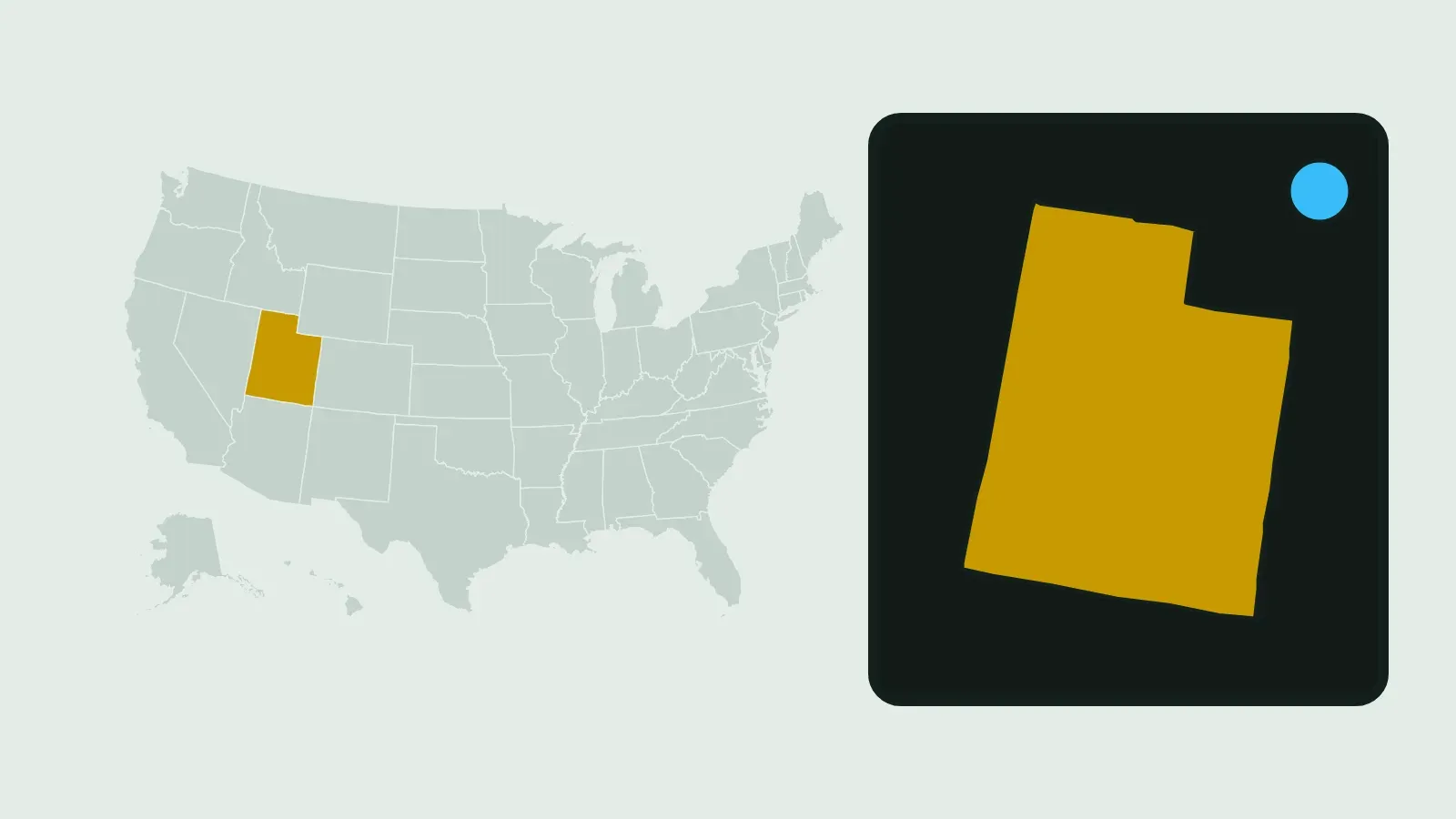
At a glance
Utah households paid an average of 13.02¢ per kWh for electricity in 2025, about 24% below the national average, and $10.19 per thousand cubic feet for natural gas, about 34% below it. EIA reports no energy-only electricity sales in Utah in 2024, so your utility sets your rate. Rooftop solar exports are credited under net billing at a set export rate, not the retail price. The state's home energy rebate program was on hold on its last posted update.
Utah at a glance
What Utahns pay for electricity and gas
The U.S. Energy Information Administration (EIA) reports statewide averages: total residential revenue divided by kilowatt-hours sold, so delivery charges and fees are inside the figure. Your own rate depends on your utility and plan, so treat these as a yardstick, not a quote.
| Energy | Utah 2025 | Utah 2024 | U.S. 2025 |
|---|---|---|---|
| Electricity (¢ per kWh) | 13.02 | 12.22 | 17.23 |
| Natural gas (dollars per Mcf) | 10.19 | 13.15 | 15.34 |
At 13.02¢, a month with 1,000 kWh of use comes to about $130. Utah electricity rose about 7% between 2024 and 2025 (12.22¢ to 13.02¢). Gas moved the other way: the Utah average fell from $13.15 to $10.19 per Mcf. One Mcf holds roughly 10.37 therms, so $10.19 per Mcf is about $0.98 per therm. The kWh, therm and ccf guide explains the units on your bill.
Who sells you electricity
EIA's 2024 state electricity profile for Utah lists 34,688,083 MWh of retail sales, all of it from full-service providers and none from energy-only providers. In practice that means the utility that delivers your power also sells it to you. Your rates come from that utility's tariff, which the Utah Public Service Commission (PSC) approves, such as Rocky Mountain Power's Tariff P.S.C.U. No. 52.
To check a rate, open your utility's tariff or look up its filings in the PSC's docket search. The rate structures guide shows how to read the pieces.
Solar panels and what the grid pays you
Rocky Mountain Power's solar tariff is named Schedule 137, Net Billing Service. Under net billing, power you send to the grid is credited at an export credit rate (ECR) instead of the retail price. The PSC approved new ECRs on February 23, 2026, effective March 1, 2026.
| Season | Before March 1, 2026 | From March 1, 2026 |
|---|---|---|
| June through September | 5.704¢ per kWh | 4.855¢ per kWh |
| October through May | 4.199¢ per kWh | 4.033¢ per kWh |
The company said the decrease came mainly from lower capacity contribution values. The credit is well below the 13.02¢ statewide average price, so a system that covers your own use is worth more per kWh than the power it exports. The PSC letter covers Rocky Mountain Power only, so if another utility serves you, ask it for its own terms. Run your numbers with the actual credit in the solar payback calculator, and see net metering explained for how the methods differ.
Home energy rebates
Federal law funds two state-run programs: HOMES for whole-home efficiency work and HEAR for electric appliances. Federal rules allow up to $8,000 per household for HOMES and up to $14,000 for HEAR. Utah's Office of Energy Development calls its version the Utah Home Energy Rebate (HER) program.
The office's page says the program is "on hold until further notice." It applied to the U.S. Department of Energy for funding in December 2024, and the page says no funds will be distributed until DOE approves. The page I read was last modified July 10, 2025 and lists no dollar amounts or launch date. Confirm with the office before you start work that you hope a rebate will cover. The HOMES and HEAR guide explains how the programs work where they have launched.
Utility rebate programs now get a state review
Utah House Bill 549 (2026), effective May 6, 2026, covers utilities with more than 200,000 retail electric or natural gas customers that run an energy rebate program. They must file an annual report with the Office of Energy Development on rebate types and amounts, customer participation, energy savings, cost-effectiveness and administrative costs. The first reports were due by September 1, 2026, and the office reviews them each year by November 1. The bill does not create rebates; it adds oversight of the ones utilities already offer.
Who to call
- Electricity rates and solar tariffs: the Public Service Commission of Utah, which handles utility dockets and tariff filings under Title 54 of the Utah Code.
- Rebates, tax credit questions and state energy programs: the Utah Office of Energy Development, at 801-538-8732.
- Your own rate and export credit: your utility's customer service, which can name the tariff schedule on your bill.
Quick answers
Can I choose my electricity supplier in Utah?
Not in practice. EIA reports that all of Utah's 2024 retail electricity sales came from full-service providers, with none from energy-only providers. Your utility delivers and sells your power under a tariff the Public Service Commission approves.
Does Utah have net metering?
Rocky Mountain Power customers are on net billing (Schedule 137), which credits exports at a set rate of 4.855¢ per kWh in June through September and 4.033¢ per kWh in October through May from March 1, 2026. Other utilities set their own terms.
Are Utah home energy rebates available now?
Not on the state's last posted update. The Utah Home Energy Rebate program was "on hold until further notice" pending DOE approval, on a page last modified July 10, 2025. Check the Office of Energy Development page before you sign a contract.
Why is Utah gas cheaper than the U.S. average?
EIA's 2025 average for Utah households was $10.19 per Mcf against $15.34 nationally. EIA does not give a reason; the figure is what utilities billed, and your own rate depends on your utility and usage.
Sources
- EIA — Electric Power Annual, Table 2.10, average price by state
- EIA — Average residential natural gas price by state
- EIA — Utah state electricity profile (retail sales by provider type, 2024)
- Utah PSC — Approval letter, Rocky Mountain Power Schedule 137 net billing (February 23, 2026)
- Utah Office of Energy Development — Home Energy Rebate program status
- Utah Legislature — H.B. 549 (2026), enrolled
Prices are EIA statewide averages. Facts on this page were checked against these sources on November 19, 2026. Rebate programs and utility tariffs change; confirm with your utility and the Utah Office of Energy Development before you act.
Read next
-
Bill guide
Net metering
How exported solar power is credited on a bill, how net billing differs, and where to find your rule.
-
Credits and rebates
HOMES and HEAR rebates
State-run DOE rebates and the May 2026 rule changes. Status differs by state.
-
State reading
Wyoming
13.37¢ per kWh; utility supplies power; net metering to 25 kW; home rebates have no launch date.