Highest
Home energy in Vermont: prices, net metering and rebate status
Vermont electricity costs about a third more than the U.S. average. Your utility supplies it, solar credits follow a formula the state reviews every two years, and home rebates had not launched.
By VoltHearth Editorial Team Updated 6 min read
- Electricity price
- 22.79¢ per kWh
- Natural gas price
- $18.00 per Mcf
- Pick your supplier
- No, utility supplies you
- Net metering
- Yes, reset every 2 years
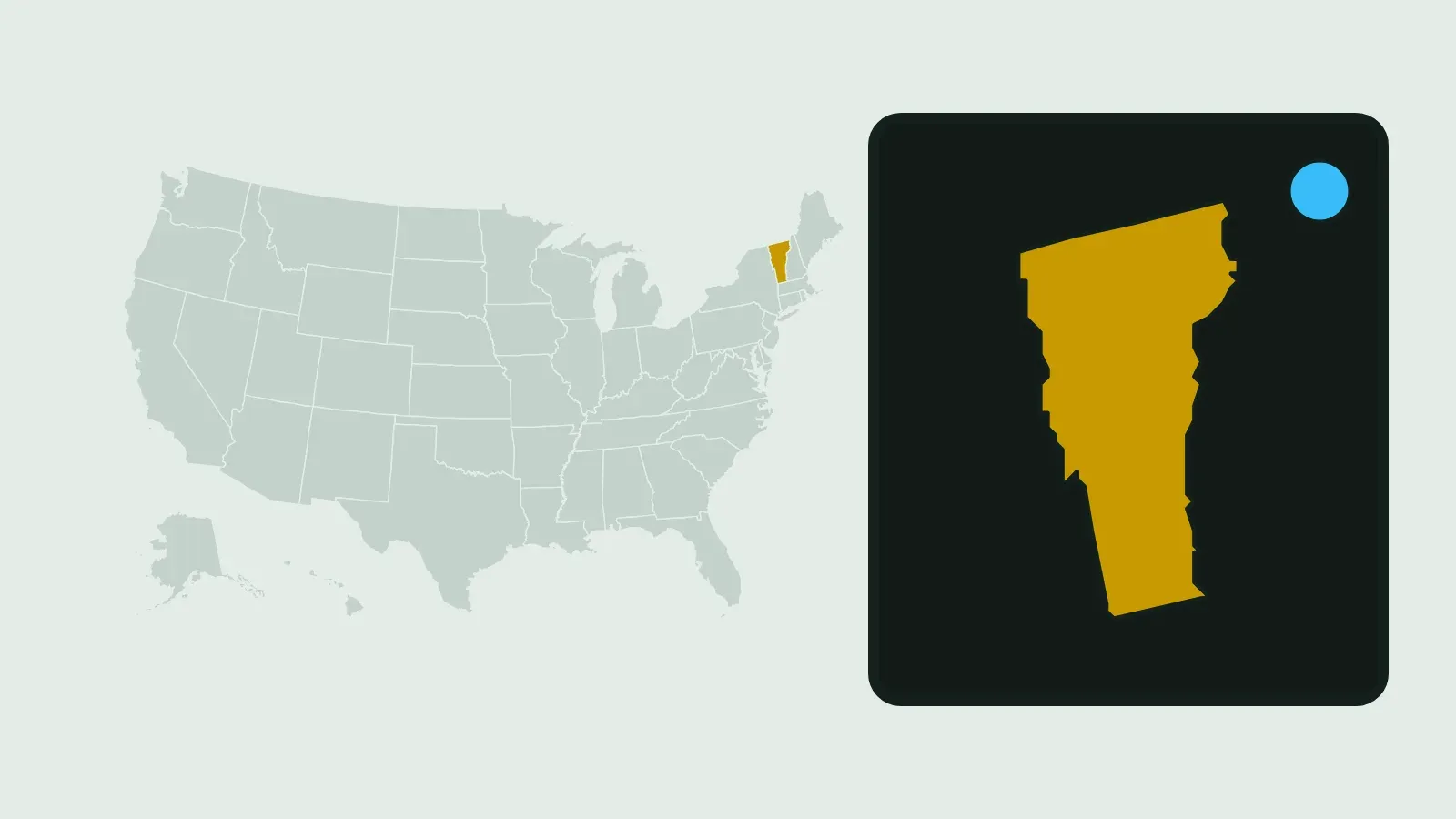
At a glance
Vermont households paid an average of 22.79¢ per kWh for electricity in 2025, about 32% above the national average, and $18.00 per thousand cubic feet for natural gas, about 17% above it. EIA reports no energy-only electricity sales in Vermont in 2024, so your utility sets your rate. Net metering credits follow a formula the Public Utility Commission (PUC) revisits every two years, and the state's HOMES and HEAR rebates had not launched at the last state update checked.
Vermont at a glance
What Vermonters pay for electricity and gas
The U.S. Energy Information Administration (EIA) reports statewide averages: total residential revenue divided by kilowatt-hours sold, so delivery charges and fees are inside the figure. Your own rate depends on your utility, so treat these as a yardstick, not a quote.
| Energy | Vermont 2025 | Vermont 2024 | U.S. 2025 |
|---|---|---|---|
| Electricity (¢ per kWh) | 22.79 | 21.90 | 17.23 |
| Natural gas (dollars per Mcf) | 18.00 | 17.34 | 15.34 |
At 22.79¢, a month with 1,000 kWh of use comes to about $228. Vermont electricity rose about 4% between 2024 and 2025 (21.90¢ to 22.79¢). One Mcf of gas holds roughly 10.37 therms, so $18.00 per Mcf is about $1.74 per therm. The kWh, therm and ccf guide explains the units on your bill.
Who sells you electricity
EIA's 2024 state electricity profile for Vermont lists 5,458,947 MWh of retail sales, all from full-service providers and none from energy-only providers. The utility that delivers your power also sells it to you. Vermont's utilities include Green Mountain Power and Washington Electric Cooperative.
The Public Utility Commission regulates electric and natural gas rates, quality of service and the siting of infrastructure. It also oversees energy efficiency. The Department of Public Service represents the public interest in energy, telecommunications and water. For how rates are structured, see the rate structures guide.
Solar panels and what the grid pays you
Vermont has net metering under PUC Rule 5.100. The PUC reviews the compensation every two years in a biennial update. Credit per kWh starts from a statewide blended residential rate, then adds adjustors, such as a deduction that depends on where and how large the system is and one for renewable energy certificates.
| Source | Blended rate | Adjustor, system 15 kW or less |
|---|---|---|
| DPS, April 1, 2026 (rules in force from July 1, 2024) | 18.398¢ per kWh | -4¢ siting |
| Washington Electric Co-op tariff, effective August 1, 2026 | 20.71¢ per kWh | -5¢ siting |
Subtract the adjustor and you get 14.398¢ in the first row and 15.71¢ in the second. Those are the listed values for a system with its renewable energy certificates transferred to the utility; keeping them takes a further 4¢ off in the DPS table. The second row is one co-op's tariff, filed June 15, 2026, not the PUC's order, which was not among the sources checked. Check your own utility's tariff, and run the number in the solar payback calculator. Net metering explained covers the method in general.
Home energy rebates
The Department of Public Service oversees Vermont's HOMES (whole-home efficiency) and HEAR (electric appliance) rebates. In testimony to the legislature on January 6, 2026, the department said HOMES had its full federal award from September 2024 but had not launched, and HEAR had a conditional award from December 2024 with no approval to launch. It said the Department of Energy had not approved any state's full award for launch since the change of administration.
The department's program page, which has no date, describes up to $16,000 in upgrades per low-income household under HOMES and heat pump rebates of up to 50% of cost, capped at $8,000, for moderate-income households under HEAR. Its expected launch dates of July 2025 have passed. Treat the amounts as plans, not an open program, and check with the department before you start work. The HOMES and HEAR guide explains how the programs work where they have opened.
Why retail rate changes reach solar credits
Vermont's blended rate follows retail rates, so a rise in your electricity price can raise the credit. The Department of Public Service projected in April 2026 that the blended rate would rise from 18.398¢ to 20.71¢ per kWh, about 13%, under business as usual. That projection left out a pending Green Mountain Power request for a 7.5% increase, which would take it to 21.92¢. The department also noted that credits for excess generation would stay fixed while retail rates rise, which makes power you use yourself worth more than power you export.
Who to call
- Electric and gas rates, net metering tariffs: the Vermont Public Utility Commission.
- Energy policy and the home energy rebates: the Vermont Department of Public Service.
- Your own credit rate: your utility, which files the net metering tariff the PUC approves.
Quick answers
Can I choose my electricity supplier in Vermont?
Not in practice. EIA reports that all of Vermont's 2024 retail electricity sales came from full-service providers, with none from energy-only providers. Your utility delivers and sells your power.
Does Vermont have net metering?
Yes, under PUC Rule 5.100. The credit is a statewide blended residential rate plus adjustors, and the PUC reviews it every two years. In April 2026 the Department of Public Service recommended a rulemaking to revise the program.
Are Vermont home energy rebates available now?
Not as of the Department of Public Service's January 6, 2026 testimony: HOMES had not launched and HEAR had no launch approval. A later status was not confirmed. Check the department before you start work you hope a rebate will cover.
Why is Vermont electricity above the U.S. average?
EIA's 2025 average for Vermont households was 22.79¢ per kWh against 17.23¢ nationally. EIA's table gives the figure, not the cause, and your own rate depends on the utility serving you.
Sources
- EIA — Electric Power Annual, Table 2.10, average price by state
- EIA — Average residential natural gas price by state
- EIA — Vermont state electricity profile (retail sales by provider type, 2024)
- Vermont PUC — Net metering
- Vermont PUC — About the Commission
- Vermont Department of Public Service — Recommendations on the 2026 net-metering biennial update (April 1, 2026)
- Washington Electric Cooperative — Net metering tariff, 2026 biennial update (filed June 15, 2026)
- Vermont Department of Public Service — Federal funds status testimony (January 6, 2026)
- Vermont Department of Public Service — Home energy rebates
Prices are EIA statewide averages. Facts on this page were checked against these sources on November 19, 2026. Net metering terms and rebate programs change; confirm with your utility, the Public Utility Commission and the Department of Public Service before you act.
Read next
-
Bill guide
Net metering
How exported solar power is credited on a bill, how net billing differs, and where to find your rule.
-

Credits and rebates
HOMES and HEAR rebates
State-run DOE rebates and the May 2026 rule changes. Status differs by state.
-
State reading
New Hampshire
24.53¢ per kWh; supplier choice, most stay on default; net metering to 1 MW; rebates not open on state pages.