High
Home energy in Wisconsin: prices, net metering and open rebates
Wisconsin electricity costs a little more than the national average and gas costs much less. Net metering varies by utility, and the state's HOMES and HEAR rebates have been running through Focus on Energy.
By VoltHearth Editorial Team Updated 6 min read
- Electricity price
- 18.08¢ per kWh
- Natural gas price
- $10.74 per Mcf
- Pick your supplier
- No, utility supplies you
- Net metering
- Varies by utility
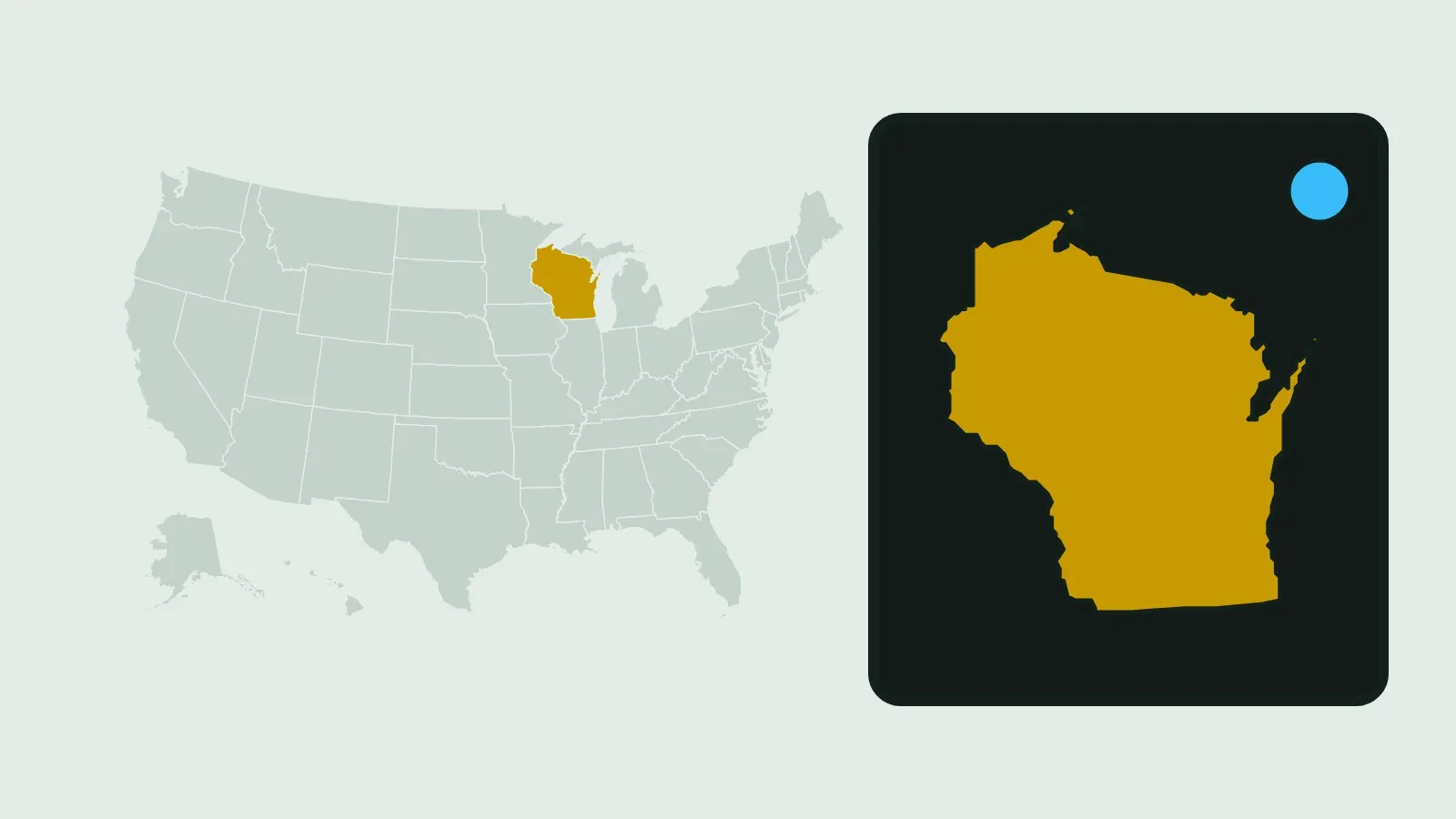
At a glance
Wisconsin households paid an average of 18.08¢ per kWh for electricity in 2025, about 5% above the national average, and $10.74 per thousand cubic feet for natural gas, about 30% below it. EIA reports no energy-only electricity sales in Wisconsin in 2024, so your utility sets your rate. Net metering rules vary by utility, and the Public Service Commission (PSC) has been investigating them. HOMES rebates have been open since August 2024 and HEAR rebates since December 2024, run by Focus on Energy.
Wisconsin at a glance
What Wisconsinites pay for electricity and gas
The U.S. Energy Information Administration (EIA) reports statewide averages: total residential revenue divided by kilowatt-hours sold, so delivery charges and fees are inside the figure. Your own rate depends on your utility, so treat these as a yardstick, not a quote.
| Energy | Wisconsin 2025 | Wisconsin 2024 | U.S. 2025 |
|---|---|---|---|
| Electricity (¢ per kWh) | 18.08 | 17.18 | 17.23 |
| Natural gas (dollars per Mcf) | 10.74 | 10.14 | 15.34 |
At 18.08¢, a month with 1,000 kWh of use comes to about $181. Wisconsin electricity rose about 5% between 2024 and 2025 (17.18¢ to 18.08¢). The gas average rose about 6%, from $10.14 to $10.74 per Mcf. One Mcf holds roughly 10.37 therms, so $10.74 per Mcf is about $1.04 per therm. The kWh, therm and ccf guide explains the units on your bill.
Who sells you electricity
EIA's 2024 state electricity profile for Wisconsin lists 68,291,424 MWh of retail sales, all of it from full-service providers and none from energy-only providers. The utility that delivers your power also sells it to you. Your rate comes from that utility's tariff, such as those of Madison Gas and Electric or Alliant Energy. The rate structures guide explains how to read the parts of a bill.
Solar panels and what the grid pays you
Wisconsin has no single statewide net metering rule in the sources checked. A WPR report from November 2023 says the rules vary by utility. In that case the PSC unanimously rejected a Madison Gas and Electric proposal to merge the buyback rates for large and small solar systems. The article put the residential rate at 13¢ per kWh and the large-system rate at 7.5¢, as of that date, and says Alliant Energy had proposed a move from monthly to hourly netting.
The PSC also opened an investigation into net metering. RENEW Wisconsin reported on August 1, 2025 that the commission, at its July 24, 2025 meeting, chose to proceed without a Wisconsin-specific value of solar study. The investigation is gathering data on rooftop solar adoption, net metering options and rate designs, time-of-use rates, and technologies such as batteries and smart thermostats. Those are news and advocacy reports, not PSC documents, and no 2026 decision was confirmed. Check your utility's current tariff.
Home energy rebates
The PSC decided that Focus on Energy would run both federally funded programs. HOMES, the whole-home performance rebates, launched August 1, 2024, through IRA Registered Contractors. HEAR, the electrification and appliance rebates, began with contractor-installed rebates on December 18, 2024. The PSC page lists estimated allocations of $74,756,512 for HOMES and $74,470,200 for HEAR. It says the programs remain operational while updated federal guidance is under review, and it shows no date.
- HEAR household maximum: $14,000 in total.
- Under 80% of Area Median Income (AMI): 100% of project cost, up to the $14,000 maximum.
- 80% to 150% of AMI: 50% of project cost, up to the maximum. Households above 150% of AMI are not eligible.
- Category limits: from $840 for dryers, stoves, cooktops and ranges to $8,000 for electric heat pumps for space heating and cooling.
A household approved for HOMES is automatically approved for HEAR, but one street address cannot receive both for the same upgrade type. The HOMES and HEAR guide explains the programs.
Store rebates for fossil fuel replacements ended September 1, 2026
Focus on Energy's HEAR page says program changes for qualifying equipment took effect September 1, 2026. From that date it no longer accepts retail post-purchase or instant-discount coupon requests for equipment that replaces fossil fuel appliances. Lowe's coupons received before September 1, 2026 can be used until their listed expiration dates. If you plan to replace a gas appliance, ask Focus on Energy which rebate path applies before you buy.
Who to call
- Electricity rates and net metering: the Public Service Commission of Wisconsin.
- Rebates: Focus on Energy, at (800) 762-7077, and the PSC's Office of Energy Innovation.
- Your own credit rate and tariff: your utility, which can name the schedule on your bill.
Quick answers
Can I choose my electricity supplier in Wisconsin?
Not in practice. EIA reports that all of Wisconsin's 2024 retail electricity sales came from full-service providers, with none from energy-only providers. Your utility delivers and sells your power.
Does Wisconsin have net metering?
Rules vary by utility, and the PSC has an investigation into net metering open. Check your utility's tariff for the credit rate and the netting interval before you sign a solar contract.
Are Wisconsin home energy rebates available now?
Yes. Focus on Energy has run HOMES since August 1, 2024 and HEAR since December 18, 2024. The PSC says the programs stay operational while updated federal guidance is reviewed. Retail coupons for equipment replacing fossil fuel appliances ended September 1, 2026.
How much can a household get from Wisconsin's HEAR rebate?
Up to $14,000 in total. Households under 80% of Area Median Income can receive 100% of project cost up to that limit, households at 80% to 150% receive 50%, and households above 150% are not eligible. Each equipment category has its own cap.
Sources
- EIA — Electric Power Annual, Table 2.10, average price by state
- EIA — Average residential natural gas price by state
- EIA — Wisconsin state electricity profile (retail sales by provider type, 2024)
- PSC of Wisconsin, Office of Energy Innovation — Federal funding, home energy rebates
- Focus on Energy — HEAR rebates
- WPR — Public Service Commission rejects utility's proposed changes to residential solar reimbursement (November 2023)
- RENEW Wisconsin — PSC moves forward on net metering investigation (August 1, 2025)
Prices are EIA statewide averages. Facts on this page were checked against these sources on November 19, 2026. The net metering items come from news and advocacy reports, not PSC documents. Net metering terms and rebate programs change; confirm with your utility, the PSC and Focus on Energy before you act.
Read next
-
Bill guide
Net metering
How exported solar power is credited on a bill, how net billing differs, and where to find your rule.
-
Credits and rebates
HOMES and HEAR rebates
State-run DOE rebates and the May 2026 rule changes. Status differs by state.
-
State reading
Minnesota
15.83¢ per kWh; net metering rules vary by utility; Save Energy Minnesota rebates not launched.