Low
Home energy in North Dakota: prices, solar rules and rebate status
North Dakota electricity and gas both sit well below the U.S. average. Utilities set rates in their own territories, and the state's two home energy rebate programs have not launched.
By VoltHearth Editorial Team Updated 5 min read
- Electricity price
- 11.82¢ per kWh
- Natural gas price
- $9.50 per Mcf
- Pick your supplier
- No retail choice found
- Net metering
- Rule exists; terms unclear
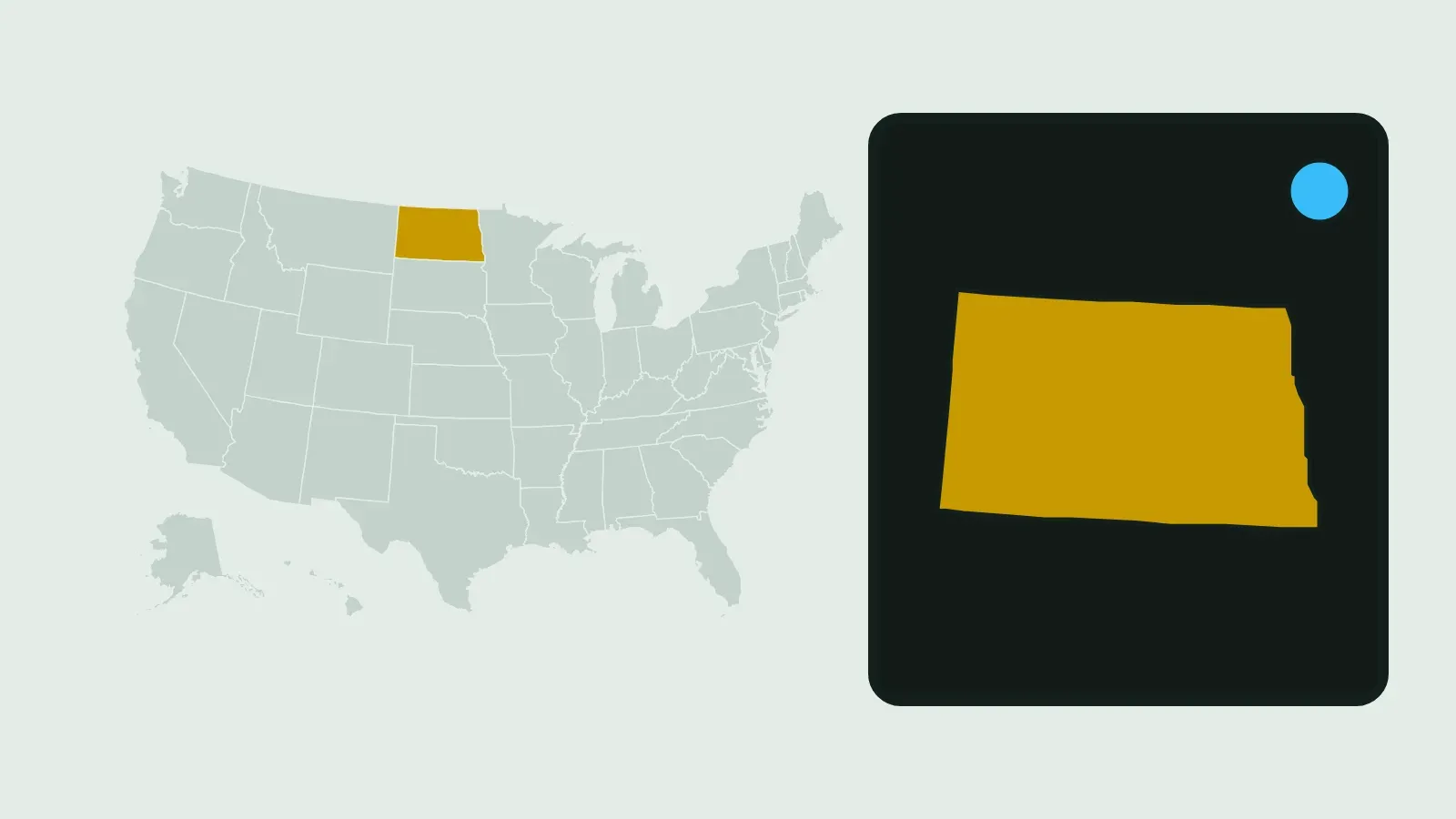
At a glance
North Dakota households paid an average of 11.82¢ per kWh for electricity in 2025, about 31% below the national average, and $9.50 per thousand cubic feet for natural gas, about 38% below it. The Public Service Commission regulates the rates of three investor-owned electric utilities, not co-ops or municipal systems. A commission rule provides net energy billing for small systems, but a 1991 legislative objection leaves its reach unclear. The state's Commerce Department says its HOMES and HEAR rebates have not launched.
North Dakota at a glance
What North Dakotans pay for electricity and gas
The U.S. Energy Information Administration (EIA) publishes a statewide average for each fuel: what utilities and suppliers billed households, divided by what they used. Delivery charges and fees are inside the number. Your own rate depends on your utility and the season, so read these as a yardstick, not a quote.
| Average price | 2024 | 2025 |
|---|---|---|
| Electricity, North Dakota (¢ per kWh) | 11.51 | 11.82 |
| Electricity, U.S. (¢ per kWh) | 16.48 | 17.23 |
| Natural gas, North Dakota (dollars per Mcf) | 8.99 | 9.50 |
| Natural gas, U.S. (dollars per Mcf) | 14.50 | 15.34 |
At 11.82¢, a month with 1,000 kWh of use comes to about $118.20. The North Dakota average rose about 3% between 2024 and 2025. Gas rose about 6%, from $8.99 to $9.50 per Mcf. One Mcf holds roughly 10.37 therms, so $9.50 is about $0.92 per therm. The kWh, therm and ccf guide explains the units on your bill.
Who sells you electricity
VoltHearth found no North Dakota program that lets households pick a retail electricity supplier, so treat the utility serving your address as the seller. The Public Service Commission (PSC) says it regulates the rates of Montana-Dakota Utilities, Northern States Power and Otter Tail Power. It does not regulate electric cooperatives or municipal utilities.
- Investor-owned utility: the PSC reviews rate changes. Look for the tariff on the utility's site or the PSC's case files.
- Co-op or city utility: the PSC does not set these rates. Ask the utility for its rate schedule and who approves changes.
For how a rate turns into a bill, see the rate structures guide.
Solar panels and net metering
The PSC's rules on small power production, in Chapter 69-09-07 of the North Dakota Administrative Code, say facilities of 100 kilowatts or less are entitled to net energy billing, where the facility's output reverses the utility meter. That section was amended effective May 1, 1991. A legislative committee objection dated August 9, 1991 says it conflicts with legislative intent for investor-owned utilities.
VoltHearth could not confirm from a current source how that provision is applied today, whether a utility credits exports at the retail rate, or what a co-op or city utility offers. The same chapter says purchase rates generally equal the utility's avoided cost.
The federal tax credit for rooftop solar ended for systems finished after December 31, 2025. What happened to 25C and 25D explains what is left.
Home energy rebates
The North Dakota Department of Commerce says neither federally funded program has launched and no rebates are available. It has applied for both and is awaiting final U.S. Department of Energy approval, and its page says there is no estimated launch date. The allocations are $37.2 million for HOMES, whole-home efficiency retrofits, and $37.1 million for HEAR, rebates on new electric appliances.
One other site, ndenergyrebates.gov, shows apply buttons and rebate amounts, including HOMES up to $16,000 for households below 80% of area median income and HEAR up to $14,000. Its links lead to a test address, so it conflicts with the Commerce page. VoltHearth treats the Commerce page as the state's statement and suggests checking it before you start work you hope a rebate will cover. The page is undated; the programs are explained in the HOMES and HEAR guide.
Who to call
- Electricity and gas rates: the North Dakota Public Service Commission, for the investor-owned utilities it regulates.
- Rebates: the North Dakota Department of Commerce, which says it will post announcements when the programs are approved.
- Co-op and city utilities: the utility itself, for its rate schedule and who approves changes.
Quick answers
Can I choose my electricity supplier in North Dakota?
VoltHearth found no state program for it. Your utility serves your address. Check your bill for the name of the utility, then see whether the PSC regulates it.
Does North Dakota have net metering?
A PSC rule provides net energy billing for facilities of 100 kilowatts or less, but a 1991 legislative committee objection leaves its reach unclear. Ask your utility for its current terms in writing.
Are North Dakota home energy rebates available now?
Not according to the Department of Commerce, which says neither HOMES nor HEAR has launched and that it awaits federal approval. Another site shows amounts but links to a test address, so check the Commerce page.
Why are North Dakota electricity prices below the U.S. average?
EIA's 2025 average for North Dakota households was 11.82¢ per kWh against 17.23¢ nationally. The figure includes delivery charges and fees. Your bill shows how your own rate is built; the electric bill guide walks through the lines.
Sources
- EIA — Electric Power Annual, Table 2.10, average price by state
- EIA — Average residential natural gas price by state
- North Dakota PSC — Electric and gas jurisdiction
- North Dakota Administrative Code — Chapter 69-09-07, small power production and cogeneration
- North Dakota Department of Commerce — Home energy rebates program
Prices are EIA statewide averages. Facts on this page were checked against these sources on November 19, 2026. The Commerce rebate page is undated and the net metering terms could not be confirmed from a current source; confirm with your utility and the Department of Commerce before you act.
Read next
-
Bill guide
Net metering
How exported solar power is credited on a bill, how net billing differs, and where to find your rule.
-
Credits and rebates
HOMES and HEAR rebates
State-run DOE rebates and the May 2026 rule changes. Status differs by state.
-
State reading
South Dakota
13.32¢ per kWh; no supplier choice; no net metering; rebate status could not be confirmed.